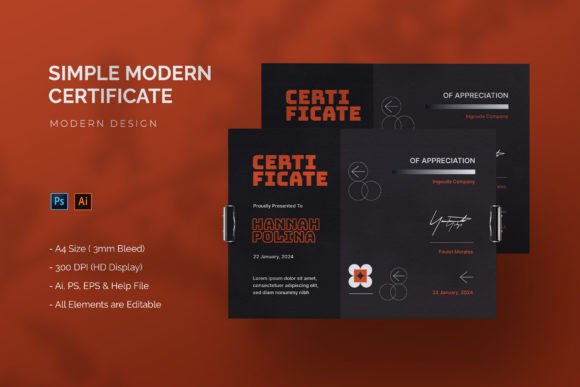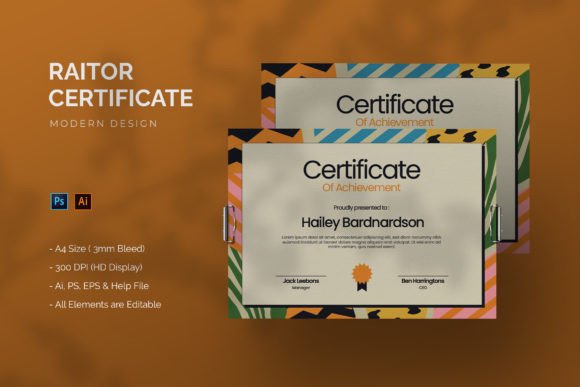
Elevating Recognition with Modern Elegant Certificate Design
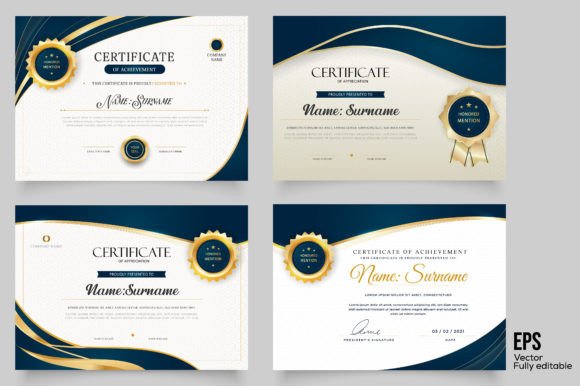
In an era where digital interactions dominate professional and personal exchanges, the tangible value of a physical or high-resolution digital award has not diminished; rather, its aesthetic expectations have risen. A certificate is no longer just a piece of paper confirming participation or achievement. It is a brand asset, a keepsake, and a reflection of the organization issuing it. This shift has given rise to the demand for Modern Elegant Certificate Design, a style that balances minimalism with sophistication, ensuring that the recipient feels truly honored.
For designers, corporate HR departments, and educational institutions, understanding the technical and artistic nuances of these templates is crucial. Whether you are creating awards for corporate milestones, academic graduations, or professional certifications, the quality of your design directly impacts the perceived value of the achievement. Utilizing versatile formats like EPS and JPEG, along with robust tools like Adobe Illustrator, allows for a level of customization that static images simply cannot match.
The Anatomy of Modern Elegance in Awards
What distinguishes a Modern Elegant Certificate Design from traditional counterparts? The answer lies in the restraint. Traditional certificates often rely on heavy borders, intricate guilloche patterns, and dense, old-fashioned typography. While these elements have their place in historical contexts, modern design favors clean lines, ample white space, and contemporary typography.
Elegance in this context is achieved through balance. It involves selecting a color palette that is subdued yet impactful—think deep navies, charcoal grays, muted golds, or soft pastels rather than primary colors. The layout prioritizes readability, ensuring that the recipient’s name and the title of the award are the focal points. By stripping away unnecessary clutter, the design allows the content to breathe, creating a sense of importance and clarity.
This approach aligns perfectly with current branding trends across industries. Tech startups, creative agencies, and modern educational platforms prefer designs that feel fresh and forward-thinking. A certificate that looks like it belongs in the 21st century reinforces the modernity of the issuing body. When you choose a template that embodies these principles, you are not just handing out a document; you are extending your brand’s visual identity into a moment of celebration.
Why Vector Formats Matter: The Power of EPS
One of the most critical considerations when selecting a certificate template is the file format. While JPEGs are useful for quick previews or web-based sharing, the true workhorse for professional design is the EPS vector file. EPS (Encapsulated PostScript) is a standard file format used in graphic design that allows for infinite scalability without any loss of quality.
Consider the practical implications. You may need to print a certificate on standard A4 paper, but next month, you might need to create a large-format banner for an awards ceremony or a small badge for a digital profile. With a raster image like a JPEG, resizing leads to pixelation and blurriness. However, because an EPS file is built on mathematical paths rather than pixels, you can resize it from the size of a postage stamp to the side of a building, and the lines will remain crisp and sharp.
Furthermore, vector files offer unparalleled control over color. In a Modern Elegant Certificate Design Template EPS and JPEG package, the EPS component allows you to edit every single element. If your company rebrands and changes its primary color from blue to green, you can update the certificate template in seconds. This flexibility is essential for maintaining brand consistency across all materials. Without vector capabilities, you would be forced to recreate the design from scratch every time a minor adjustment is needed.
Compatibility and Workflow with Adobe Illustrator
To fully leverage the benefits of an EPS file, Adobe Illustrator is the industry-standard tool of choice. Specifically, templates designed for Illustrator CS6 EPS ensure broad compatibility. While newer versions of Illustrator exist, CS6 remains a widely used benchmark that guarantees the file can be opened and edited by a vast majority of designers without version conflict issues.
Working within Illustrator allows for precise manipulation of the design elements. You can adjust the kerning of the text to ensure perfect spacing, modify the stroke weights of decorative lines, and rearrange layout components to fit longer or shorter names. The layer structure in a well-designed template will typically separate background elements, decorative motifs, and text fields, making the editing process intuitive and efficient.
For those who may not have extensive experience with vector software, the learning curve is manageable when starting with a pre-made template. The heavy lifting of creating balanced compositions and elegant curves has already been done. Your role becomes one of customization rather than creation. This significantly reduces the time required to produce high-quality certificates, allowing teams to focus on the event or recognition program itself rather than getting bogged down in design minutiae.
The Role of Typography and Free Fonts
Typography is the voice of your certificate. In a Modern Elegant Certificate Design, the choice of font can make or break the aesthetic. Serif fonts often convey tradition and authority, while sans-serif fonts suggest modernity and approachability. Many modern elegant designs utilize a combination of both, pairing a sophisticated serif for the header with a clean sans-serif for the body text.
A significant advantage of many contemporary templates is the use of Free Font Use. Licensing fees for premium fonts can add up, especially for small businesses or non-profits. By utilizing high-quality free fonts, designers can keep costs low without sacrificing style. However, it is important to verify the license terms even for free fonts, ensuring they are permitted for commercial use if the certificates are part of a paid program.
When editing your template, pay close attention to hierarchy. The recipient's name should be the largest and most prominent text element. The award title follows, and the date and signature lines are typically smaller. Consistent use of font weights and sizes guides the viewer’s eye through the information logically. Avoid using too many different typefaces; sticking to two or three complementary fonts maintains the clean, elegant look that defines this style.
Practical Applications and Customization Tips
The versatility of a Modern Elegant Certificate Design Template EPS and JPEG means it can be adapted for a wide range of scenarios. Here are a few practical ways to maximize the utility of these designs:
- Corporate Recognition: Use muted gold accents and strong sans-serif fonts for employee of the month awards or service anniversaries. This conveys professionalism and prestige.
- Educational Achievements: For workshops or online courses, opt for cleaner, minimalist layouts with plenty of white space. This appeals to a younger, tech-savvy demographic.
- Event Participation: Brighten the palette slightly for community events or volunteer recognition. The vector nature allows you to easily swap colors to match event themes.
When customizing, always double-check the alignment. In Adobe Illustrator, use the alignment tools to ensure that text boxes are centered perfectly relative to the decorative elements. Even a slight misalignment can detract from the "elegant" feel. Additionally, consider the printing process. If you are printing physically, ensure your color mode is set to CMYK rather than RGB to avoid color shifts. For digital distribution, keep the JPEG export settings high quality to maintain sharpness on screens.
Investing in Quality Design Assets
In the long run, investing in high-quality, editable templates saves time and money. Instead of hiring a designer for every single certificate need, having a master Modern Elegant Certificate Design template allows internal teams to generate consistent, professional awards on demand. The ability to resize and recolor without losing quality ensures that the asset remains useful regardless of how your needs evolve.
Moreover, the perception of value matters. A poorly designed certificate can undermine the significance of an achievement. Conversely, a beautifully crafted, elegant certificate becomes a item people proudly display on their walls or share on LinkedIn. It extends the reach of your brand and reinforces the positive association with your organization.
As you explore options for your next recognition program, prioritize flexibility and aesthetics. Look for templates that offer both EPS and JPEG formats, ensuring you have the right file for both print and digital uses. Embrace the simplicity of modern design, and let the quality of the vector artwork do the heavy lifting. By doing so, you elevate not just the certificate, but the entire experience of recognition.
If you find value in these versatile design resources and wish to expand your library with more professional vector assets, consider following the creator’s portfolio. Continuous access to fresh, high-quality templates ensures that your design toolkit remains current and effective. Thank you for prioritizing excellence in your recognition efforts.