NFT Distro: Clean UI Design Kit
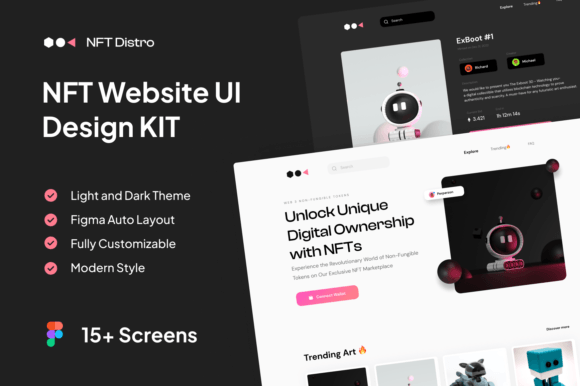
Launching a digital asset platform requires more than just a smart contract; it demands an interface that builds trust and guides users effortlessly through complex transactions. The NFT Distro - NFT Website UI Design KIT emerges as a specialized resource for designers and developers aiming to streamline this process. By providing a pre-structured, visually cohesive foundation, this kit addresses the common bottleneck of starting from scratch. It is not merely a collection of images but a functional design system tailored for the unique aesthetic and usability requirements of the Web3 space.
For many creators, the gap between a brilliant concept and a launch-ready product is filled with hours of repetitive UI work. This kit bridges that gap by offering fifteen meticulously crafted screens that cover essential user journeys. Whether you are building a marketplace, a portfolio site, or a minting platform, having a vector-based, scalable foundation allows you to focus on branding and functionality rather than reinventing basic components.
Why Structure Matters in Web3 Design
The non-fungible token landscape is often criticized for poor user experience. Clunky interfaces, confusing navigation, and inconsistent visual hierarchies can deter potential buyers and collectors. A well-organized design kit like NFT Distro prioritizes clarity. Each screen is designed with clean lines and ample white space, ensuring that the digital art remains the focal point while the interface supports seamless interaction.
Because the files are vector-based, they offer infinite scalability without loss of quality. This is crucial for responsive design, where elements must look sharp on everything from mobile phones to large desktop monitors. The ability to easily change colors means that brands can align the template with their identity quickly, reducing the time spent on manual adjustments.
Tailored Value for Different Creators
The utility of a UI kit varies significantly depending on who is using it. Understanding how different professionals interact with these tools can help you decide if this resource fits your workflow.
For Freelancers and Agency Designers
Time is the most valuable currency for freelancers. When a client requests an NFT platform, starting with NFT Distro - NFT Website UI Design KIT can cut initial design time by half. Instead of spending days creating buttons, headers, and card layouts, you begin with a polished base. The well-organized layers mean you can hand off files to developers with confidence, knowing that every element is named logically. This professionalism enhances your reputation and allows you to take on more projects without sacrificing quality.
For Entrepreneurs and Startup Founders
If you are launching a new venture, budget constraints are often a reality. Hiring a full-time UI designer for the initial prototype may not be feasible. This kit serves as a cost-effective alternative, allowing founders to create high-fidelity mockups for investor pitches or user testing. The fifteen screens provide enough breadth to demonstrate core features, such as user profiles, asset galleries, and transaction histories. It enables entrepreneurs to validate their ideas visually before committing significant resources to custom development.
For Developers with Design Sensibilities
Many full-stack developers possess coding skills but lack advanced design training. For this group, a UI kit acts as a safety net against common aesthetic pitfalls. Since the kit is compatible with Figma and uses free Google fonts, integration into the development pipeline is straightforward. Developers can inspect spacing, typography, and color codes directly, ensuring that the final coded product matches the design intent. The vector editability allows for minor tweaks without needing to consult a graphic designer for every small change.
For Educators and Students
In educational settings, understanding modern UI patterns is essential. Instructors can use NFT Distro as a teaching aid to demonstrate best practices in layout, hierarchy, and component organization. Students can deconstruct the file to see how professional designers structure their layers and groups. It provides a real-world example of how to balance artistic expression with functional usability, offering practical insights that theoretical lessons alone cannot provide.
Key Features That Enhance Workflow
Beyond the visual appeal, the technical construction of the kit determines its long-term usefulness. Here is what makes this specific package stand out for practical application:
- Vector-Based Flexibility: Every element is created using vectors, meaning you can resize any component without pixelation. This is vital for creating assets that need to adapt to various screen densities.
- Organized Layer Structure: Chaos in design files leads to errors in development. The layers in this kit are named and grouped logically, making it easy to locate specific elements like buttons, icons, or text blocks.
- Easy Color Customization: The color palette is set up for quick modification. If your brand uses a dark mode aesthetic or vibrant neon accents, you can update the global styles efficiently, and the changes will propagate across all fifteen screens.
- Free Google Font Compatibility: By relying on widely available fonts, the kit ensures that your design remains accessible and easy to implement. There are no licensing hurdles or expensive font purchases required.
- Figma Native Format: As one of the leading collaborative design tools, Figma allows for real-time teamwork. The 100% vector editable nature ensures that you can manipulate every curve and anchor point to suit your specific needs.
Evaluating Fit for Your Project
Before integrating any design resource, it is important to assess whether it aligns with your specific goals. If you are looking for a highly customized, avant-garde artistic direction that breaks all conventional UI rules, a template might feel restrictive. However, if your priority is reliability, speed, and industry-standard usability, this kit offers a robust starting point.
Consider the scope of your project. With fifteen screens, the kit covers the primary touchpoints of an NFT platform. If your project requires extensive additional pages, such as complex analytics dashboards or multi-step verification flows, you can use the existing components to build those extra screens consistently. The modular nature of the design means it can expand beyond the included pages.
For hobbyists and bloggers exploring the NFT space, this kit provides a tangible way to visualize ideas. It transforms abstract concepts into concrete visuals, helping you communicate your vision more effectively to collaborators or audiences. Even if you do not plan to launch a full platform, having a professional-looking design can enhance content creation, such as tutorial videos or case studies.
Practical Application Examples
Imagine a small business owner wanting to tokenize loyalty rewards. Using NFT Distro - NFT Website UI Design KIT, they can quickly mock up a user dashboard showing owned tokens and redemption options. The clean interface ensures that customers find the process intuitive, increasing adoption rates.
Alternatively, a digital artist might use the kit to create a personal storefront. By customizing the colors to match their artwork and using the gallery screens to showcase their collections, they present a professional front that rivals larger marketplaces. The ease of editing illustrations and organizing layers allows them to maintain their unique brand voice while benefiting from solid UX principles.
In every scenario, the value lies in the balance between structure and freedom. The kit provides the skeleton, but you add the muscle and skin. It respects the intelligence of the user by offering a clean, detailed foundation that does not dictate creativity but enables it. By removing the friction of basic setup, it allows you to concentrate on what truly differentiates your project: the content, the community, and the unique value proposition you bring to the digital economy.